- Accueil
-
Notre communauté
- Our Lady of Mount Carmel -Patroness of Our Church
- Parish Staff
- Directions
- Local Parish Description
- Memorial Chapel
- Masses and Sacraments Schedule
- Gospel Sharing (Mandarin)
- Archdiocese of Toronto
- Catholic Cemeteries
- Bénévolat
- Accessibilité
- Politique de sécurité de l'environnement
- Other Chinese Parishes
- Stewardship Sunday
- Notre foi
- Nos ministères
- Vie paroissiale
- Bulletin
- Nous contacter
- Recherche

Cardinal Leo's Message for the Archdiocesan Day for Palliative Care
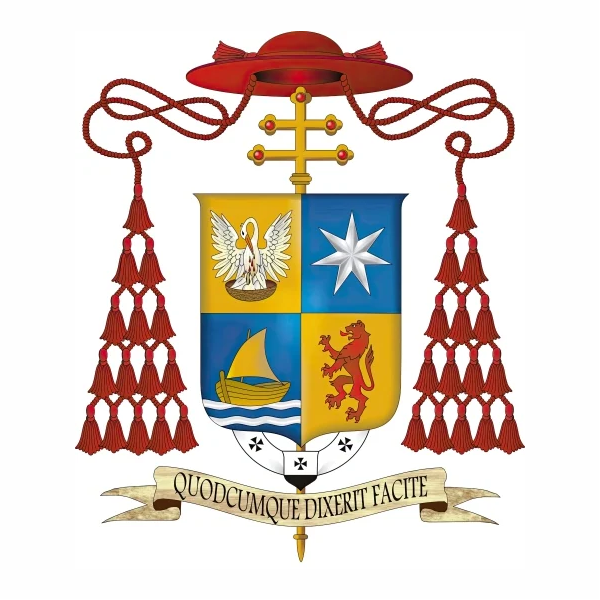
Message for the Archdiocesan Day for Palliative Care
24-25 October 2026
His Eminence Frank Cardinal Leo
Metropolitan Archbishop of Toronto
My Dear Brothers and Sisters,
On the occasion of our annual Archdiocesan Day for Palliative Care, it is significant that this observance falls on the last Sunday of October, just prior to the Great Solemnity of All Saints' Day and the Commemoration of all the Faithful Departed (All Souls’ Day), when we remember the Church's beautiful proclamation that "with death, life is changed not ended" (Roman Missal, Preface I For the Dead). This proximity is fitting, because palliative care is ultimately about life not death, transition not termination.
I would suggest that palliative care represents one of the most humane developments in modern healthcare. At its heart, it seeks to improve quality of life by addressing the physical, emotional, social, and spiritual needs of individuals living with serious illness—needs that the Gospel has always insisted belong together (cf. CCC 362-365). While often associated with the final stages of life, palliative care can be offered earlier as well, helping people live as fully and meaningfully as possible throughout the course of an illness. It focuses not simply on illness, but on the whole person, including their transcendent and spiritual dimensions.
Furthermore, the importance of palliative care extends far beyond hospitals and hospices. It reminds society, our contemporaries, that healthcare is not only about curing disease but about honouring the dignity of every person created by God in his image and likeness and saved by Christ. By helping persons manage symptoms, maintain independence, and participate in family and community life, palliative care enables people to continue pursuing what gives their lives purpose and joy and provide the space for God’s grace to intervene. By encouraging meaningful conversations and fostering a culture of attentiveness to one another's needs, families often discover new opportunities for gratitude, reconciliation, and mutual support as they navigate the challenges of illness together.
At a time when many people are concerned about suffering, loss of independence, and difficult end-of-life decisions, palliative care offers a positive and compassionate path forward. Rather than focusing solely on the limitations imposed by illness, it seeks to maximize comfort—neither hastening death nor prolonging dying—and help individuals live each day as a gift from our loving God, as fully as possible, so that they can face serious illness with confidence, peace, and hope, not to mention openness to supernatural faith and the reality of eternity on the other side of the death experience.
As faithful in the Archdiocese of Toronto, we proclaim our conviction that every human life possesses an enduring dignity that neither illness, frailty, nor age can diminish (cf. CCC 2276). By placing human dignity, personal well-being, and meaningful relationships at the centre of healthcare, palliative care helps build communities marked by hope, solidarity, and genuine care for one another. Please join me in praying for all those touched by palliative care—recipients, families, friends, medical personnel, Christian communities and those who shape law and policy—that we may together be witnesses to Christ’s redeeming love, life-giving care, and limitless compassion (cf. Mt 25:36). In doing so, we will renew our communities with a faithfilled and supernatural vision that builds up and never tears down.
